Greg Anthony (born November 15, 1967, Las Vegas, Nevada) is a former NBA point guard who helped lead UNLV to the 1990 NCAA championship before embarking on an 11-year professional career (1991–2002). Selected in the first round of the 1991 NBA Draft by the New York Knicks, he later had stints with the Vancouver Grizzlies, Seattle SuperSonics, Portland Trail Blazers, Milwaukee Bucks, and Chicago Bulls. After retiring, Greg Anthony became a national basketball analyst, and he is the father of NBA guard Cole Anthony.
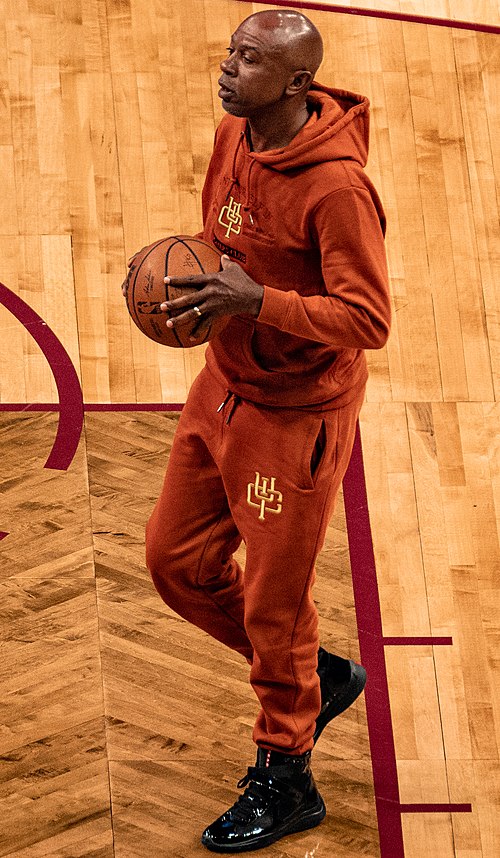
Career Snapshot
Greg Anthony’s NBA journey spanned the rugged, defense-first era of the 1990s into the early-2000s. Known for floor leadership, perimeter defense, and reliable ball-handling, he carved out a role as a steady point guard on playoff-caliber teams while contributing to locker-room stability and game management.
UNLV and the 1990 Title Run
Before the NBA, Anthony quarterbacked the UNLV Runnin’ Rebels’ up-tempo attack to the 1990 national title, highlighted by a 103–73 win over Duke—the largest margin in championship game history at the time. His collegiate résumé cemented his reputation as a poised decision-maker and disruptive defender.
Draft and Early Knicks Years (1991–1995)
A 1991 first-round pick, Greg Anthony joined the New York Knicks during their fierce playoff battles with the Chicago Bulls and other Eastern powers. In New York, he embraced a defensive identity, pushing pace when needed and providing steady minutes behind veteran guards in high-stakes, late-spring Basketball.
Expansion Leader: Vancouver Grizzlies (1995–1997)
Selected in the 1995 expansion draft, Anthony brought veteran stability to the Vancouver Grizzlies. He started frequently, mentored young teammates, and shouldered playmaking duties for a new franchise establishing its NBA footing.
Role Player Evolution: Seattle and Portland (1997–2001)
With the SuperSonics and Trail Blazers, he transitioned into a veteran role player, offering second-unit orchestration, situational defense, and playoff-ready experience. His adaptability kept him valuable on deep, competitive rosters.
Final Stops and Transition to Media (2001–2002)
Late-career appearances with the Bucks and Bulls preceded a successful move into broadcasting. Greg Anthony became a familiar voice on national platforms covering the NBA and college hoops, translating on-court insight into analysis for a broad audience.
Stats and Impact Profile
While not a high-usage scorer, Anthony contributed consistent assists and steals, maintained solid assist-to-turnover discipline, and excelled as a point-of-attack defender. His value shows up in lineup stability, pace control, and situational decision-making—Stats that often complement stars.
Legacy and Influence
Greg Anthony’s Legacy blends championship pedigree at UNLV with durable NBA service as a trusted guard. As a broadcaster, he’s helped shape public understanding of scheme, spacing, and guard play. His influence also extends through the next generation via Cole Anthony’s NBA career.
2025 Perspective: How We Remember Greg Anthony
In 2025, Anthony stands as a case study in role definition: a guard who maximized strengths, adapted across eras, and remained relevant through media. His path illuminates how leadership, defense, and situational intelligence endure in modern NBA Discussion.
Discussion Questions
- Where does Greg Anthony rank among 1990s defensive-minded point guards in the NBA?
- How much did his UNLV title run in 1990 shape his pro trajectory and reputation for leadership?
- In today’s 2025 pace-and-space era, what role would best fit Greg Anthony’s skill set?
- Which stint—Knicks, Grizzlies, or Blazers—best represents his peak impact and why?
- How has his broadcasting work influenced your view of guard play and team strategy?
Share your take below—add your Stats, favorite moments, and comparisons to keep the Basketball Discussion going.